
How to Find the Best Martial Arts Self-Defense Classes Near You
How to Find Safe, Local Martial Arts Self‑Defense Classes Near You
Finding the right martial arts self-defense training near you starts with clarity: know what you want to learn, then choose a school that teaches it safely and effectively. In this guide, GIGAKICK Martial Arts Academy distills a proven process—set your goals, research local programs, verify instructors, take trial classes, and confirm the curriculum and culture fit. Whether you seek practical personal safety training, the best martial arts self-defense for women, or a family-friendly path to fitness and confidence, use the steps below to quickly and accurately shortlist top options. Along the way, we reference industry guidance on disciplines, school selection, and trial classes to help you make a confident decision based on real-world readiness and long-term growth.
Define Your Self-Defense Training Goals
Clarifying your objectives ensures you choose a program that matches your priorities and pace.
Common goals include:
- Real-world self-defense and personal safety training
- Confidence building and personal empowerment
- Physical conditioning, mobility, and stress relief
- Skill development for women, youth, or older adults
- Competition or belt/rank advancement
- Community, discipline, and character development
Self-defense is the use of physical or verbal techniques to protect yourself from harm in real-life scenarios—prevention and de-escalation first, then efficient escapes if needed. Different martial arts emphasize unique skills:
- Striking arts (kickboxing/Muay Thai) build stand-up defense, footwork, and conditioning.
- Grappling systems (Brazilian Jiu-Jitsu/Judo) teach leverage, escapes, and ground control.
- Scenario-based curriculums (Krav Maga, urban defense) focus on practical application, situational awareness, and quick threat mitigation, as noted in this comprehensive guide to self-defense martial arts [1].
Choose a system that fits your current fitness level and any limitations, and progress gradually to reduce injury risk while building durable skills [1].
Research Local Martial Arts Schools and Programs
Use multiple sources to create a smart shortlist. Start with search engines, map apps, Yelp, and social media to identify nearby academies and community centers; then compare culture, safety, and schedules by reading reviews and watching class clips—an approach echoed in guidance on how to find a reputable self-defense school [2]. Community centers often run affordable introductory courses for beginners, which can be a great low-risk entry point, according to a guide to finding classes in your area [3]. Local forums such as Reddit add firsthand, regional insights and red flags via community recommendations [4].
Quick research tools and what they reveal:
| Tool | What it’s good for | What to look for |
| --- | --- | --- |
| Google/Maps | Proximity, hours, websites | Up-to-date schedules, program pages, trial info |
| Yelp | Student reviews, photos | Mentions of safety, beginners, instructor attention |
| Instagram/YouTube/TikTok | Class culture, teaching style | How beginners are treated; cleanliness; pacing |
| Reddit/Local FB Groups | Firsthand recs, regional options | Consistent praise or concerns, alternatives nearby |
| City Parks & Rec/Community Centers | Budget-friendly intros | Short courses, youth/women-only offerings |
Pro tip: Compare the total cost of attendance (tuition, uniform/gear, testing fees, commute time) across finalists so you’re evaluating the real investment—not just monthly dues.
Verify Instructor Credentials and Experience
Qualified coaches protect your safety and accelerate progress. Verify instructor certifications, professional affiliations, and real-world self-defense experience—not just a belt rank—consistent with best practices for vetting schools [2]. A certified martial arts instructor holds recognized credentials from established organizations and maintains ongoing education or recertification.
Ask instructors:
- What certifications and coaching credentials do you hold?
- Where have you applied these skills in high-pressure or real-world scenarios?
- How do you adapt techniques for different sizes, ages, or abilities?
- What are your class safety standards and progression policies?
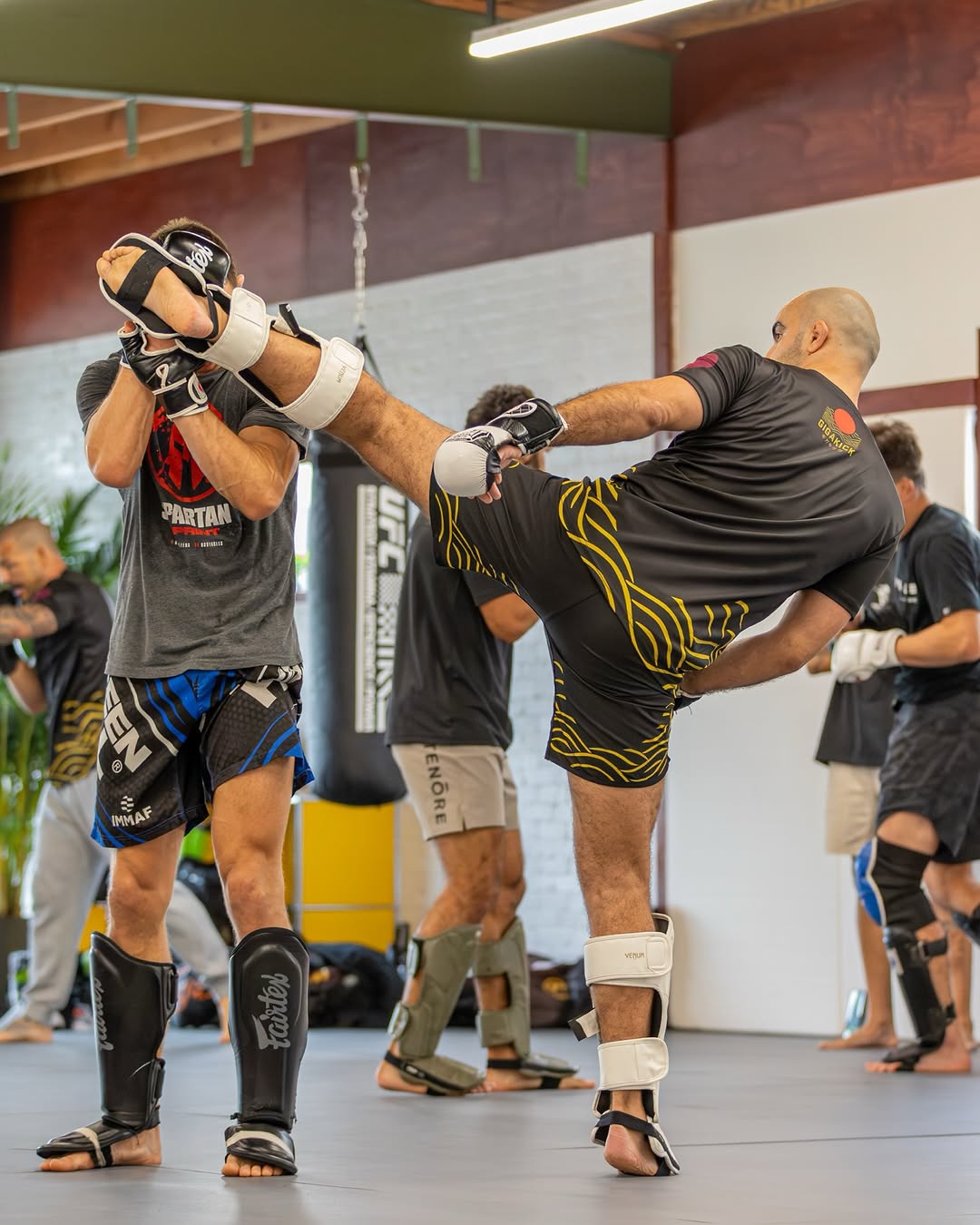
Confirm backgrounds through site bios, direct conversations, and reviews. Competition-tested coaches with world-class experience often translate to sharper technique, safer training, and clearer coaching under pressure—advantages you’ll find in GIGAKICK programs that integrate UFC-level expertise with practical self-defense.
Take Trial Classes to Assess Safety and Fit
A trial class is the most reliable way to judge instruction quality and culture. Observe class size, coach-to-student attention, and overall vibe, as beginner-focused advice recommends [3]. Many schools lower barriers with free or low-cost introductions; in fact, many institutions offer trial sessions to help new students get started [5]. GIGAKICK provides straightforward membership options and a clear path from introductory classes to ongoing training.
Use this quick checklist during trials:
- Class ratio: Reasonable teacher-to-student numbers; targeted coaching
- Safety protocols: Supervised contact, clear rules, clean mats/gear
- Beginner onboarding: Stepwise introductions; consent-based contact; scaling by ability
- Communication: Coaches explain why a technique works, not just how
- Culture: Welcoming environment for women, youth, and vulnerable groups; zero tolerance for ego or intimidation [1]
You should leave feeling informed, respected, and excited—not overwhelmed or pressured.
Evaluate Curriculum and Skill Progression
A clear curriculum accelerates learning and builds accountability. Curriculum progression is a structured sequence of skills students advance through—often by belts, ranks, or modules—with regular feedback. Ask how progress is measured, how new students are onboarded, and how scenario training and controlled live practice (e.g., situational sparring) are integrated for real-world readiness [1].
Typical progression snapshots:
| Level | Approx. timeline | Primary focus | Markers of progress |
| --- | --- | --- | --- |
| Beginner | 0–3 months | Foundations: stance, movement, basic strikes/escapes, boundary-setting | Safe breakfalls, basic combos, fundamental grips/escapes, verbal strategies |
| Intermediate | 3–12 months | Pressure-tested drills, defense chains, distance/clinching, ground transitions | Controlled sparring rounds, scenario responses (grabs, walls), improved cardio |
| Advanced | 12+ months | Complex scenarios, multi-step problem solving, weapon-awareness principles | Coaching newer students, adaptable game-plans, resilient defense under fatigue |
Look for specialized formats tailored to needs—women-only, youth, or empowerment classes—often emphasizing scenario drills, leverage-based escapes, and confidence-building communication skills [3]. For a deeper primer on evidence-based skills versus hype, see GIGAKICK’s insights on what truly works in self-defense training.
Commit to a Supportive and Respectful Training Community
Long-term success comes from training in an environment where respect and accountability are the norm. Prioritize academies whose mission and daily practice emphasize character development, discipline, and inclusivity. A supportive community celebrates progress, encourages questions, and makes all members—regardless of age, background, or starting point—feel welcomed.
Consistency compounds results. Attend regularly, set small goals, and engage with peers to build confidence and a sense of belonging. Authentic academies foster both personal and physical growth through mutual respect—core to GIGAKICK’s Character First philosophy and the kind of environment that encourages lifelong learning.
Frequently Asked Questions
How do I find martial arts self-defense classes near me?
Use online directories, local gym and community center listings, and academy websites to quickly locate programs, then compare reviews, videos, and trial options.
What makes a martial arts class safe and suitable for beginners?
Clear safety rules, level-appropriate groups, stepwise instruction, and supervised contact help beginners learn effectively without unnecessary risk.
Are there self-defense classes designed specifically for women?
Yes—many schools, including GIGAKICK Martial Arts Academy, offer women-only courses focused on empowerment, leverage-based escapes, and supportive peer communities.
What should I expect during my first self-defense class?
An introduction to core movements and drills, a review of safety protocols, and the option to observe or participate at a comfortable pace.
How do I know if an instructor is qualified and trustworthy?
Look for recognized certifications, transparent experience, positive reviews, and a clear safety-first teaching approach supported by a structured curriculum.